
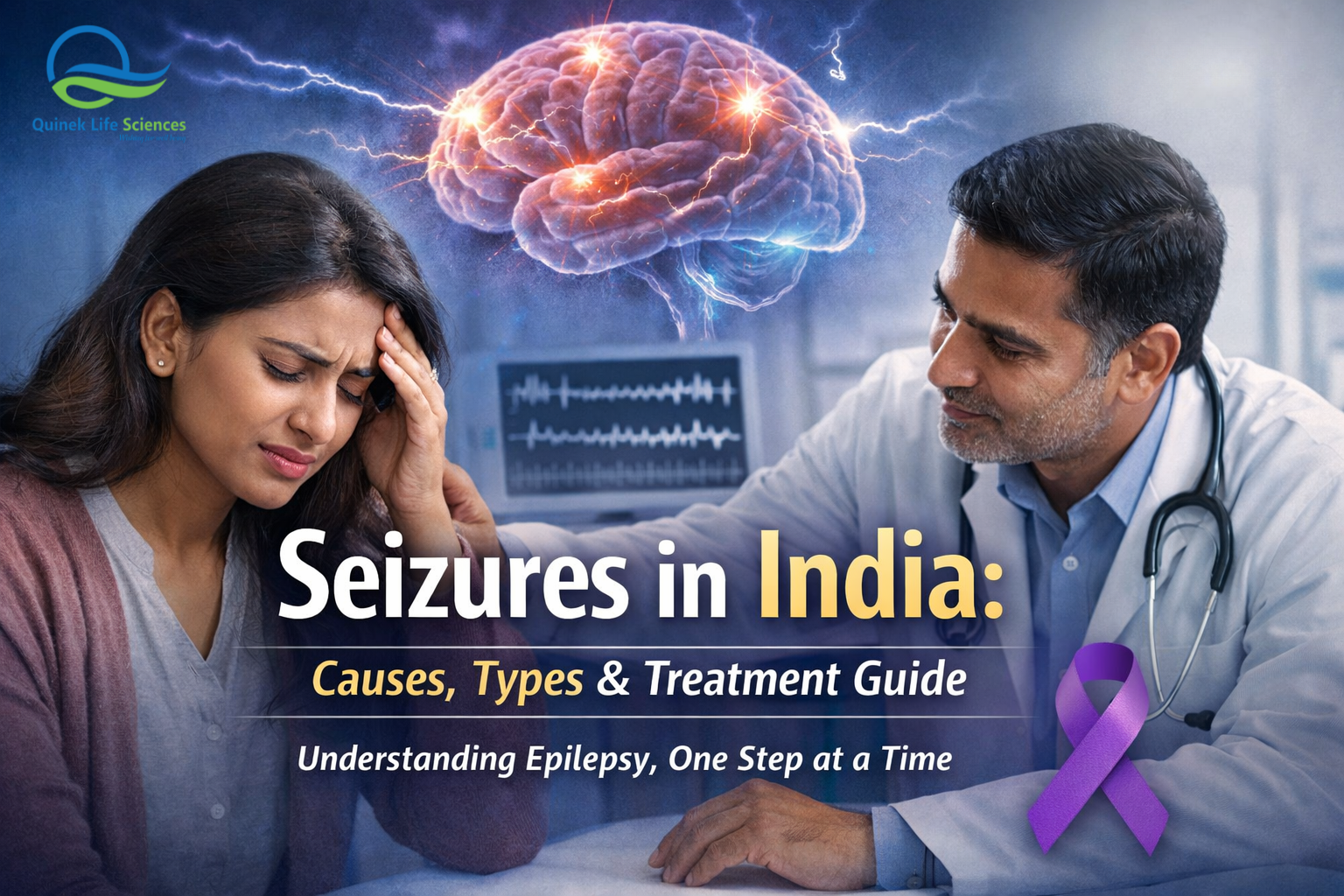
10M+
People With Epilepsy in India
70%
Receiving No Treatment
70%
Can Be Seizure-Free With Medicine
20%
Of Global Epilepsy Burden — India
If you have ever witnessed someone have a seizure — a sudden, frightening loss of control that lasts less than two minutes but feels like forever — you know why this condition carries such enormous fear. And if you or someone you love has been diagnosed with epilepsy, you know why that fear can quietly take over an entire life.
Here is the thing that nobody tells you clearly enough: most people with epilepsy can live completely normal lives. Not a diminished version of normal. Not a careful, restricted, always-worried version. Actually normal — with the right diagnosis, the right medicines and the right support.
The problem is not that seizures are untreatable. The problem is the gap between what is possible and what most people in India actually receive — in awareness, in diagnosis, in treatment and in the basic dignity of not being made to feel that their condition defines them.
This article closes that gap. It is written for patients and families trying to understand what is happening. It is written for general practitioners who are often the first — and sometimes the only — doctor a person with epilepsy will see. And it is written for neurologists and specialists who need a pharmaceutical partner they can trust when they reach for an anticonvulsant. We have tried to make it honest, clinical and human — in equal measure.
IN THIS ARTICLE
- What is a Seizure — And What is Epilepsy
- The Epilepsy Burden in India — Numbers That Demand Attention
- What Causes Seizures — The Full Picture
- Types of Seizures — Why Classification Matters
- How Epilepsy is Diagnosed
- Treatment — What Works and What the Evidence Says
- Anti-Seizure Medicines — A Clinical Guide
- Living With Epilepsy — The Truth Nobody Tells You
- Seizure First Aid — What Everyone Should Know
- How Quinek Life Sciences Supports Neuropsychiatry Specialists
What is a Seizure — And What is Epilepsy?
A seizure is a sudden, uncontrolled burst of electrical activity in the brain. Think of it like a power surge — the brain’s normal, coordinated electrical signalling is temporarily overwhelmed, producing a range of effects depending on which part of the brain is affected and how far the electrical disturbance spreads.
Not every seizure means epilepsy. A single seizure can be triggered by fever (febrile seizures in children), low blood sugar, alcohol withdrawal, a head injury or severe sleep deprivation — and may never recur. Epilepsy is diagnosed when a person has had two or more unprovoked seizures more than 24 hours apart, or when there is a high risk of recurrence after a first seizure based on EEG or imaging findings.
This distinction matters enormously — because it changes the treatment decision, the long-term prognosis and what you tell the patient and family sitting across from you.
CLINICAL DEFINITION
According to the International League Against Epilepsy (ILAE) 2014 definition, epilepsy is a disease of the brain defined by any of the following: at least two unprovoked seizures occurring more than 24 hours apart; one unprovoked seizure with a probability of further seizures similar to the general recurrence risk after two unprovoked seizures (at least 60%) over the next 10 years; or diagnosis of an epilepsy syndrome.
The Epilepsy Burden in India — Numbers That Demand Attention
India has more people living with epilepsy than almost any country on earth. The scale of the problem is staggering — and the gap between the number of people who have epilepsy and the number receiving adequate treatment is one of the most damning indictments of our collective approach to neurological health.
The most important number in that table is not the 10 million with epilepsy. It is the parallel figure — up to 70% could be seizure-free with appropriate medicines. We are not failing these patients because we lack effective treatments. We are failing them because of stigma, because of poor awareness, because of inadequate access to neurologists and because of the economic barriers to sustained pharmaceutical management.
What Causes Seizures — The Full Picture
Understanding the cause of a seizure is not an academic exercise. It directly determines the treatment approach, the prognosis and the counselling you give the patient and family. The same seizure presentation can have very different underlying causes — and different causes require different management strategies.
Structural Causes
Brain lesions — tumours, strokes, cortical malformations, hippocampal sclerosis — are among the most common identifiable causes of epilepsy in adults. In India, neurocysticercosis (NCC) — a parasitic infection caused by the larval stage of Taenia solium — is a particularly significant structural cause, accounting for an estimated 25–30% of adult-onset epilepsy in many Indian studies. This is a cause that is largely absent in Western epilepsy literature but cannot be ignored in the Indian clinical context.
IMPORTANT FOR INDIAN CLINICIANS
Research published in Neurology India found neurocysticercosis to be the single most common identifiable cause of new-onset seizures in Indian adults. Every new-onset seizure in an adult should prompt consideration of NCC — and appropriate imaging and serology — before a final diagnosis is made.
Genetic Causes
Many epilepsy syndromes — particularly those beginning in childhood and adolescence — have a genetic basis. Genetic generalised epilepsies (GGE), including juvenile myoclonic epilepsy and childhood absence epilepsy, are among the most common epilepsy syndromes globally and respond well to specific anti-seizure medicines. Understanding the genetic basis helps explain why some patients have a family history of seizures and guides medicine selection — certain drugs that work well for focal epilepsies can actually worsen generalised epilepsies.
Metabolic and Systemic Causes
Hypoglycaemia, hyponatraemia, hypocalcaemia, uraemia, hepatic encephalopathy and thyroid dysfunction can all trigger seizures — and these are provoked seizures that resolve when the underlying metabolic problem is corrected. They do not necessarily require long-term anti-seizure medication. Identifying metabolic causes is why baseline blood investigations are essential in every new seizure presentation.
Infectious Causes
Meningitis, encephalitis and cerebral abscess are important infectious causes of acute symptomatic seizures — and some, like tuberculous meningitis, leave behind structural changes that cause chronic epilepsy. In India, the infectious aetiology of seizures is more clinically significant than in most high-income countries and must be actively considered — particularly in patients presenting with fever, neck stiffness or altered consciousness alongside their seizure.
Idiopathic — Unknown Cause
Despite modern investigation, a significant proportion of epilepsy cases — particularly in resource-limited settings — remain without a clearly identified cause. These are not necessarily untreatable. Many idiopathic epilepsies respond excellently to standard anti-seizure medicines.
Types of Seizures — Why Classification Matters for Treatment
The 2017 ILAE classification of seizures is the current clinical standard — and understanding it is not just academic. The type of seizure directly determines which anti-seizure medicine to use. Getting this wrong — giving a medicine appropriate for focal seizures to a patient with generalised seizures — can make the condition worse, not better.
Focal Seizures — Starting in One Area of the Brain
Focal seizures begin in a specific region of one hemisphere. Depending on where they start, they can produce a wide range of symptoms — a strange smell, a rising sensation in the abdomen, déjà vu, repetitive hand movements, staring, lip-smacking or, if the electrical activity spreads widely enough, a convulsion that looks identical to a generalised seizure (focal to bilateral tonic-clonic seizure).
Focal Aware
Consciousness preserved. Patient aware during seizure. Previously called “simple partial seizure.”
Focal Impaired Awareness
Consciousness impaired. Patient unaware or confused during seizure. Previously “complex partial.”
Focal to Bilateral Tonic-Clonic
Starts focal, spreads to both hemispheres. Produces full convulsion. Most dramatic presentation of focal epilepsy.
Generalised Seizures — Involving Both Hemispheres from Onset
Generalised seizures involve networks spanning both brain hemispheres from the very beginning. Consciousness is almost always impaired or lost immediately.
Tonic-Clonic
The “grand mal” — stiffening followed by rhythmic jerking. Most recognisable seizure type.
Absence
Brief staring spells — often missed in children. Sudden onset and offset. Responsive immediately after.
Myoclonic
Brief, sudden muscle jerks — often in the morning. Classic in juvenile myoclonic epilepsy.
Tonic
Sudden muscle stiffening — often causing falls. Common in Lennox-Gastaut syndrome.
Atonic
Sudden loss of muscle tone — sudden drop without warning. Significant injury risk.
CRITICAL CLINICAL POINT
Sodium Valproate and Levetiracetam are broad-spectrum — effective against both focal and generalised seizures. Carbamazepine and Oxcarbazepine are effective for focal seizures but can worsen absence and myoclonic seizures. Prescribing without knowing the seizure type is one of the most common — and most preventable — clinical errors in epilepsy management.
How Epilepsy is Diagnosed
Epilepsy is primarily a clinical diagnosis — built on a careful, detailed history. The EEG and MRI support the clinical impression, help classify the epilepsy and guide treatment, but they do not replace the history. A normal EEG does not rule out epilepsy. An abnormal EEG does not confirm it.
The History — The Most Important Investigation You Have
Get the history from both the patient and a witness to the seizure. Ask about the prodrome — was there a warning? The seizure itself — what happened first, what happened next, how long did it last? The postictal period — how long before they were back to normal? The context — was the patient sleep-deprived, febrile, stressed, unwell? Previous episodes — has this happened before, even if milder? Family history — has anyone in the family had seizures?
EEG — Electroencephalogram
The EEG records the brain’s electrical activity and can identify epileptiform discharges — abnormal electrical patterns associated with seizure disorders. A routine EEG captures 20–30 minutes of brain activity. The yield is increased with sleep deprivation, prolonged recording and activation procedures. A normal interictal EEG does not exclude epilepsy — up to 50% of people with epilepsy have a normal routine EEG at first recording.
MRI Brain
MRI is the preferred neuroimaging for epilepsy — more sensitive than CT for detecting cortical dysplasia, hippocampal sclerosis, tumours and vascular malformations. CT is acceptable as a first-line investigation in emergency settings. Epilepsy-protocol MRI — thin slices through the temporal lobes with specific sequences — is preferred over routine brain MRI for epilepsy evaluation.
Blood Investigations
Full blood count, metabolic panel (glucose, sodium, calcium, magnesium), liver and kidney function, and thyroid profile should be checked in every new-onset seizure. In endemic regions, neurocysticercosis serology and appropriate CSF examination should be considered.
Treatment — What Works and What the Evidence Says
The goal of epilepsy treatment is not just seizure reduction. It is seizure freedom — with minimal or no medication side effects — allowing the patient to live as full and unrestricted a life as possible. This is achievable in the majority of patients with epilepsy. The evidence is clear. The challenge is execution.
When to Start Treatment
Not every seizure requires immediate anti-seizure medication. A single provoked seizure — caused by a reversible trigger like hypoglycaemia or acute alcohol withdrawal — generally does not require long-term medication. A single unprovoked seizure may or may not require treatment depending on the risk of recurrence — which is assessed based on EEG findings, imaging and clinical features. Two or more unprovoked seizures — the standard diagnostic threshold for epilepsy — generally warrant treatment initiation.
The Decision to Start — What to Tell the Patient
Be honest. Tell the patient that anti-seizure medicines control seizures but do not cure epilepsy. Tell them that finding the right medicine at the right dose sometimes takes time. Tell them that most people with epilepsy become seizure-free on the first or second medicine tried — but that some will need combination therapy. Tell them that stopping medicine suddenly is dangerous and that they must not do it without medical supervision. Tell them that the goal is a normal life — and that for most of them, a normal life is entirely achievable.
Anti-Seizure Medicines — A Clinical Guide
The pharmacological management of epilepsy requires precision. The right medicine for the wrong seizure type does not just fail — it can actively make things worse. Quality matters enormously — inconsistently manufactured anti-seizure medicines with variable bioavailability can cause breakthrough seizures even in previously well-controlled patients.
At Quinek Life Sciences, our anti-convulsant range is manufactured at WHO-GMP, GLP and ISO certified facilities — giving neurologists and general practitioners the confidence that every tablet contains exactly what it says it does, every time.
Sodium Valproate — Broad Spectrum First Line
Sodium Valproate remains one of the most widely used and most versatile anti-seizure medicines available. It is effective across multiple seizure types — generalised tonic-clonic, absence, myoclonic and focal seizures — making it particularly useful when seizure classification is uncertain. It works by enhancing GABA activity and blocking voltage-gated sodium channels.
QUINEK FORMULATIONS
DPROKS 250 — Divalproex Sodium 250mg
DPROKS 500 — Divalproex Sodium 500mg Prolonged Release
ALPOR 500 — Sodium Valproate 333mg + Valproic Acid 145mg Controlled Release
Broad spectrum coverage · WHO-GMP certified · Consistent bioavailability
Note: Valproate is teratogenic and should be avoided in women of childbearing age unless no suitable alternative exists. Always counsel patients appropriately.
Levetiracetam — Modern Broad Spectrum
Levetiracetam has become a first-line choice in many epilepsy guidelines — valued for its broad-spectrum efficacy, linear pharmacokinetics, minimal drug interactions and good tolerability profile. It binds to synaptic vesicle protein SV2A and modulates neurotransmitter release. Behavioural side effects — irritability, mood changes — are the most commonly reported concern and should be discussed with patients before initiation.
QUINEK FORMULATION
EVETAM-P — Levetiracetam 500mg Prolonged Release
Modern broad-spectrum ASM · Minimal drug interactions · WHO-GMP certified
Pregabalin — For Focal Epilepsy and Neuropathic Pain
Pregabalin is used as adjunctive therapy in focal seizures and is also a first-line treatment for neuropathic pain — making the combination with Methylcobalamin clinically valuable in patients where seizure disorder coexists with peripheral neuropathy, which is not uncommon in diabetic patients with epilepsy.
QUINEK FORMULATIONS
P2M — Pregabalin 75mg + Methylcobalamin 750mcg
NIXCHEL-NT — Pregabalin 75mg + Methylcobalamin 750mcg + Nortriptyline
Adjunctive focal epilepsy · Neuropathic pain · Nerve support combination
MEDICINE SELECTION GUIDE — SEIZURE TYPE
Generalised Tonic-Clonic
Valproate · Levetiracetam · Lamotrigine
Absence Seizures
Valproate · Ethosuximide · Lamotrigine
Myoclonic Seizures
Valproate · Levetiracetam · Clonazepam
Focal Seizures
Levetiracetam · Valproate · Pregabalin (adjunct)
Living With Epilepsy — The Truth Nobody Tells You
This is the section that most clinical articles skip. The medicines are important. The diagnosis is important. But what happens after the consultation — when the patient goes home and tries to figure out what their life looks like now — that is where most of the real challenge lies.
You Can Drive — With Conditions
India’s Motor Vehicles Act does not permit people with epilepsy to hold a commercial driving licence. For private vehicles, the general guidance is seizure-free for at least one year on medication before driving. This should be discussed clearly — and documented — in every consultation. The patient has a right to know, and you have a responsibility to tell them.
You Can Work — In Most Jobs
The vast majority of jobs are entirely compatible with epilepsy. Work at heights, operation of heavy unguarded machinery and certain other high-risk occupations require individual assessment. But office work, teaching, medicine, law, engineering, creative fields — none of these are inherently incompatible with epilepsy. The assumption that epilepsy means professional limitation is wrong and harmful.
You Can Have Children — With Planning
Women with epilepsy can and do have healthy pregnancies. The key issues are folic acid supplementation before conception, medicine review (valproate should be avoided if possible in pregnancy), specialist monitoring throughout pregnancy and careful planning. These conversations should start before pregnancy — not during it.
Triggers Are Real — But Not Universal
Sleep deprivation is the most consistently identified seizure trigger. Others include alcohol, missed medication, fever, stress and — in photosensitive epilepsy — flashing lights. Trigger sensitivity varies enormously between individuals. Not everyone with epilepsy has identifiable triggers. Helping patients identify their personal triggers — through a seizure diary — is practical and empowering.
Stigma Is the Biggest Barrier to a Normal Life
In India, epilepsy is still associated in many communities with supernatural causes, mental illness and social exclusion. People lose marriages, jobs and social standing because of a diagnosis. Children are withdrawn from school. This is not a medical problem — but it has medical consequences, because stigma drives non-disclosure, which drives delays in treatment, which leads to more seizures and worse outcomes. Every clinician who treats a patient with epilepsy with matter-of-fact normality — who calls it a neurological condition, who talks about treatment the way they would talk about hypertension management — is doing something that matters beyond the prescription.
Seizure First Aid — What Everyone Should Know
Most seizures stop on their own within one to three minutes and require no medical intervention beyond keeping the person safe. The biggest danger during a convulsive seizure is not the seizure itself — it is injury from falling or from well-meaning bystanders doing the wrong thing.
How Quinek Life Sciences Supports Neuropsychiatry Specialists
Quinek Life Sciences is a WHO-GMP, GLP and ISO certified specialty pharmaceutical company with a comprehensive neuropsychiatry range — including anti-convulsants, anti-depressants, anti-anxiety medicines, anti-psychotics and neurovitamins.
In epilepsy management specifically, medicine quality is not optional — it is clinical. A patient who has been seizure-free on a particular formulation of Sodium Valproate can experience breakthrough seizures if switched to a substandard generic with inconsistent bioavailability. The brand you prescribe matters. The facility it was manufactured in matters. The quality controls it was subjected to matter.
Our anti-convulsant range — including Divalproex Sodium, Sodium Valproate controlled release, Levetiracetam and Pregabalin combinations — is built for the clinical demands of neuropsychiatry practice in India. If you are a neurologist, psychiatrist or general practitioner looking to partner with a quality-first neuropsychiatry pharmaceutical company in India — get in touch with our team today.
“70% of people with epilepsy could be seizure-free. The medicines exist. The knowledge exists. The only thing missing is access — and awareness.”
Quinek Life Sciences — WHO-GMP Certified Neuropsychiatry Pharmaceutical Company, India
References & Further Reading
- International League Against Epilepsy — Definition and Classification of Epilepsy, 2014
- World Health Organization — Epilepsy Fact Sheet, 2023
- Neurology India — Neurocysticercosis and Epilepsy in India
- Indian Epilepsy Society — Clinical Guidelines and Resources
- ILAE Commission Report — Treatment Gap in Epilepsy
- Indian Epilepsy Association — Patient Resources and Awareness Guidelines
- Quinek Life Sciences — Neuropsychiatry Segment
This article is for educational purposes and clinical reference. It does not constitute medical advice for individual patients. Always consult a qualified neurologist or epileptologist for diagnosis and treatment decisions. Do not stop or change anti-seizure medicines without medical supervision.