
56M
Indians Living With Depression
38M
Indians With Anxiety Disorders
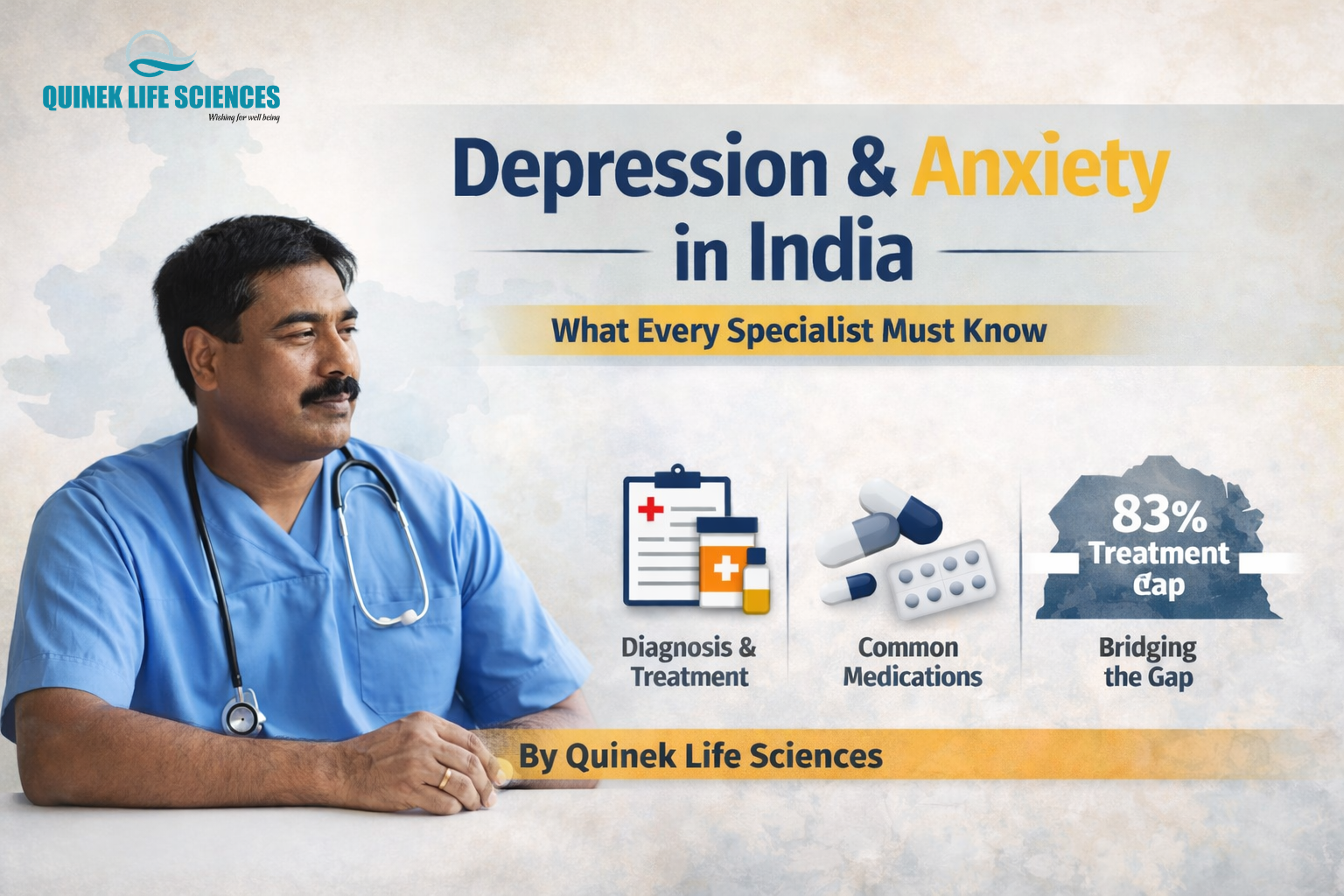
83%
Treatment Gap in India
0.75
Psychiatrists Per 100,000 People
Here is a number that should stop you mid-scroll.
India has 56 million people living with depression and 38 million with anxiety disorders. That is nearly 100 million people — roughly the population of Egypt — quietly carrying conditions that affect how they think, how they function, how they parent, how they work and whether they choose to keep living.
And 83% of them will never receive any treatment.
Not because treatment does not exist. Not because the medicines are not there. But because of a failure that runs deeper than any single policy or any single system — a failure of awareness, of access, of attitude and of the way we as a society have decided to think about the mind.
This article is not a feel-good awareness piece. It is a clinical and contextual examination of why depression and anxiety in India have reached crisis levels — what is driving it, what the science says about treatment, what general practitioners and psychiatrists need to know about managing these conditions effectively, and why the choice of pharmaceutical partner matters more in neuropsychiatry than almost anywhere else in medicine.
IN THIS ARTICLE
- The Scale of the Problem — What the Data Actually Shows
- Why India is Failing Its Mental Health — The Real Reasons
- Understanding Depression — Beyond Sadness
- Anxiety Disorders in India — The Many Faces
- Diagnosis — What General Practitioners Must Know
- Treatment — The Evidence-Based Approach
- Medicines in Depression and Anxiety — What Works and Why
- The Stigma Problem — And How Doctors Can Help Break It
- How Quinek Life Sciences Supports Neuropsychiatry Specialists
The Scale of the Problem — What the Data Actually Shows
India accounts for nearly 18% of the global burden of depression — despite having 17% of the world’s population. That near-parity sounds manageable until you realise that India also has a fraction of the mental health infrastructure of most comparably-sized economies.
The last figure is perhaps the most damning. Less than 1% of India’s total health budget goes to mental health. In a country where mental disorders are the leading cause of years lived with disability — this is not a funding gap. It is a statement of priorities.
Post-pandemic, these numbers have worsened. Research published in The Lancet Psychiatry estimated a 27.6% increase in major depressive disorder globally in 2020 — and India, with its unique combination of economic stress, social isolation and healthcare disruption, was disproportionately affected.
Why India is Failing Its Mental Health — The Real Reasons
The treatment gap in India is not one problem. It is several problems stacked on top of each other, each one making the others worse.
1. Stigma That Runs Bone Deep
In large parts of India, mental illness is still attributed to moral weakness, spiritual failing, family karma or personal character flaw. A person with depression is told to “think positively.” Someone with anxiety is told to “stop overthinking.” A person experiencing psychosis may be taken to a faith healer before they ever see a psychiatrist — if they ever do.
This stigma does not just delay treatment. It actively prevents people from acknowledging their own symptoms — because to acknowledge the symptoms is to accept the label, and the label carries consequences in marriage, employment and social standing that feel more immediately threatening than the illness itself.
2. A Catastrophic Shortage of Specialists
India has fewer than 9,000 psychiatrists for a population of 1.4 billion. The United States — with less than a quarter of India’s population — has over 45,000. Even accounting for differences in healthcare models, the disparity is stark. In rural India, a patient with depression may need to travel several hours to see a psychiatrist — and in many districts, there is no psychiatrist to see at all.
This is why the role of the general practitioner in mental health management is not optional in the Indian context — it is essential. GPs are often the only medical professional a person with depression or anxiety will ever consult. Their ability to screen, diagnose and initiate treatment is not a secondary competency. It is a frontline responsibility.
3. The Primary Care Gap
Despite being the first point of contact for most mental health presentations, many Indian primary care physicians are not adequately trained in psychiatric screening tools or psychopharmacology. Time constraints in busy outpatient settings compound this — a GP seeing 60 patients in a morning does not have the bandwidth to administer a PHQ-9 and explore a patient’s mental health history.
4. Economic Barriers
Mental health treatment in India is expensive relative to average incomes — particularly when it involves long-term medication, regular specialist consultations and psychotherapy. For a family earning ₹15,000–₹20,000 a month, sustained psychiatric care is not accessible without financial strain.
Understanding Depression — Beyond Sadness
One of the most damaging misconceptions about depression is that it is essentially severe sadness — and that if a person does not seem sad, they probably do not have it. This misunderstanding leads to underdiagnosis, delayed treatment and patients being dismissed by clinicians who are looking for the wrong signs.
Depression presents differently in different people — and in Indian populations specifically, somatic presentations are disproportionately common. Patients come in with chronic pain, fatigue, digestive complaints and sleep disturbance — not with complaints of low mood. The low mood is there, but it is buried under physical symptoms that feel more socially acceptable to discuss.
Core Diagnostic Criteria — DSM-5
Depressed mood
Most of the day, nearly every day — by subjective report or observation
Anhedonia
Markedly diminished interest or pleasure in all or almost all activities
Sleep disturbance
Insomnia or hypersomnia — both are recognised presentations
Fatigue or energy loss
Nearly every day — often the presenting complaint in Indian patients
Cognitive changes
Poor concentration, indecisiveness, memory complaints
Psychomotor changes
Observable agitation or retardation — not merely subjective
Worthlessness or guilt
Excessive or inappropriate guilt — not just self-reproach
Suicidal ideation
Recurrent thoughts of death or suicide — always requires immediate clinical attention
Five or more of these symptoms — present for at least two weeks, representing a change from previous functioning, causing significant distress or impairment — meet the DSM-5 criteria for Major Depressive Disorder. Crucially, at least one of the five must be either depressed mood or anhedonia.
CLINICAL TOOL FOR SCREENING
The PHQ-9 (Patient Health Questionnaire-9) is a validated, freely available screening tool that takes less than 3 minutes to administer. A score of 10 or above has a sensitivity of 88% and specificity of 88% for major depression. Every general practitioner should have this in their clinic.
Anxiety Disorders in India — The Many Faces
Anxiety is not one condition. It is a family of conditions — each with distinct presentations, distinct treatment approaches and distinct medication profiles. Lumping them together as “anxiety” and treating them interchangeably is one of the most common clinical errors in primary care management of mental health.
Generalised Anxiety Disorder (GAD)
Persistent, excessive worry about multiple domains of life — work, health, family, finances — that is difficult to control, present more days than not, for at least six months. Physical symptoms include muscle tension, fatigue, sleep disturbance and irritability. GAD is one of the most common anxiety presentations in Indian outpatient settings — often presenting as chronic stress with somatic overlay.
Panic Disorder
Recurrent, unexpected panic attacks — sudden surges of intense fear with physical symptoms including palpitations, chest tightness, shortness of breath, dizziness and paresthesia — followed by persistent worry about future attacks or significant behavioural changes. Panic attacks are frequently misdiagnosed as cardiac events in Indian emergency departments — leading to unnecessary investigations and missed psychiatric diagnosis.
Social Anxiety Disorder
Intense, persistent fear of social situations where the person might be scrutinised, embarrassed or humiliated. In India, this is significantly underdiagnosed — partly because the social withdrawal it causes is sometimes attributed to introversion or cultural modesty rather than recognised as a clinical condition causing genuine functional impairment.
OCD — Obsessive-Compulsive Disorder
While technically classified separately from anxiety disorders in DSM-5, OCD shares significant clinical overlap and is commonly encountered in neuropsychiatry practice. In India, OCD with religious or contamination obsessions is particularly prevalent — and particularly under-recognised because the compulsive behaviours are sometimes interpreted as religious devotion rather than clinical symptoms.
Diagnosis — What General Practitioners Must Know
In India’s healthcare reality, the general practitioner is the de facto mental health frontline. Most patients with depression and anxiety will see a GP first — and many will only ever see a GP. This makes basic psychiatric competency in primary care not a nice-to-have but an absolute clinical necessity.
Screening Tools Every GP Should Use
When to Refer to a Psychiatrist
Not every case of depression or anxiety needs specialist referral — but some do. Refer urgently when there is any suicidal ideation with intent or plan. Refer routinely when there is treatment resistance after two adequate antidepressant trials, when there is diagnostic uncertainty, when psychotic features are present, when bipolar disorder is suspected or when the patient is pregnant or planning pregnancy.
Treatment — The Evidence-Based Approach
The good news about depression and anxiety in India is this — they respond well to treatment. Not always quickly. Not always completely. But the evidence base for antidepressant pharmacotherapy and psychotherapy is robust and consistent. These are not conditions we manage hoping for the best. We treat them with tools that work.
The Biopsychosocial Model
Effective treatment of depression and anxiety addresses three dimensions simultaneously — the biological (brain chemistry, genetics, physical health), the psychological (thought patterns, coping mechanisms, trauma history) and the social (relationships, work stress, economic pressure, isolation). Medicines address the biological dimension. Psychotherapy addresses the psychological. Social support and lifestyle change address the social.
In India’s resource-constrained setting, the full biopsychosocial model is not always achievable — but every clinician can address at least two of the three dimensions in every consultation, even without access to a psychologist.
Lifestyle — The Undervalued Intervention
Before any prescription is written, lifestyle factors should be assessed and addressed. Physical exercise has Level 1 evidence for depression — a meta-analysis of 33 randomised controlled trials showed it to be as effective as antidepressants for mild to moderate depression. Sleep hygiene, social connection, reduction of alcohol and substance use, and dietary improvements all have meaningful effects on mood and anxiety that no medicine can replicate.
Medicines in Depression and Anxiety — What Works and Why
Pharmacotherapy remains the cornerstone of moderate to severe depression and anxiety management — and the choice of antidepressant matters. Efficacy, tolerability, drug interactions, cost and the specific symptom profile of the patient all influence which medicine is right.
At Quinek Life Sciences, our neuropsychiatry range covers the full spectrum of antidepressant and anxiolytic pharmacotherapy — manufactured at WHO-GMP, GLP and ISO certified facilities to give specialists confidence in every prescription.
SSRIs — First Line for Most Presentations
Selective Serotonin Reuptake Inhibitors are the first-line pharmacological treatment for both depression and most anxiety disorders. They are well-tolerated, have a favourable side effect profile compared to older antidepressants and have robust evidence across multiple conditions.
QUINEK SSRI RANGE
ESITOLOX 10 / 20 — Escitalopram 10mg / 20mg — First line for MDD and GAD
SERLIX-50 — Sertraline 50mg — First line, particularly for OCD and panic disorder
SERLIX-A — Sertraline 50mg + Alprazolam 0.5mg — For mixed anxiety-depression with acute anxiety component
FLUTIX-10 — Fluoxetine 10mg — Long half-life, useful where compliance is a concern
E-FRESH PLUS — Escitalopram 10mg + Clonazepam 0.5mg — For depression with significant anxiety overlay
IXAMINE-50/100 — Fluvoxamine 50mg/100mg — Particularly effective in OCD
SNRIs — When SSRIs Are Not Enough
Serotonin-Norepinephrine Reuptake Inhibitors add noradrenergic activity to serotonergic effects — making them particularly useful for depression with significant fatigue, pain and concentration symptoms. They are also effective in GAD and social anxiety disorder.
QUINEK SNRI RANGE
ELNAFAX 37.5 — Venlafaxine 37.5mg — SNRI first line, particularly effective in anxious depression
DESVY-50 — Desvenlafaxine ER 50mg — Active metabolite of Venlafaxine, more predictable pharmacokinetics
DESVY-PLUS — Desvenlafaxine ER 50mg + Clonazepam 0.5mg — For SNRI initiation with anxiolytic cover
DUXIN-20/30 — Duloxetine 20mg / 30mg — SNRI with particular efficacy in painful depression and GAD
Atypical Antidepressants
For patients who do not respond to or tolerate SSRIs/SNRIs, or who have specific symptom profiles — atypical antidepressants offer important alternatives.
QUINEK ATYPICAL RANGE
MIXTAZ-15 — Mirtazapine 15mg — NaSSA; particularly useful in depression with insomnia and poor appetite. Sedating at lower doses — useful where sleep is a priority
LIXOL-M — Flupentixol 0.5mg + Melitracen 10mg — Low-dose combination with anxiolytic and antidepressant properties; widely used in mixed anxiety-depression in primary care
Anxiolytics — Important but Requiring Careful Management
Benzodiazepines and related agents have an important role in acute anxiety management — but their potential for dependence means they should be used at the lowest effective dose for the shortest necessary duration, with clear patient counselling about the risks of long-term use.
QUINEK ANXIOLYTIC RANGE
APIZ-MD 0.25 / 0.5 — Etizolam MDT — Short-acting, mouth dissolving; useful for acute anxiety episodes
PREX-0.5 — Alprazolam 0.5mg — For acute anxiety with panic component
LOZY-1 / 2 / 3 — Lorazepam 1mg / 2mg / 3mg — For acute anxiety, pre-procedure and inpatient use
IXPAM-0.25 / 0.5 / 1 / 2 — Clonazepam — Longer-acting; useful in panic disorder and as augmentation in depression
MELATIX-5 — Melatonin 5mg — For sleep disturbance in anxiety and depression without dependence risk
ZOLI-10 — Zolpidem 10mg — For insomnia where sleep initiation is the primary complaint
IMPORTANT CLINICAL NOTE ON BENZODIAZEPINES
Benzodiazepines should not be first-line treatment for GAD, social anxiety or OCD — where SSRIs and SNRIs have superior long-term evidence. They are appropriate for short-term acute anxiety management, for use during the latency period while antidepressants are establishing effect, and in specific inpatient or procedural contexts. Always document indication, duration and review date when prescribing.
The Stigma Problem — And How Doctors Can Help Break It
Every clinician who manages a patient with depression or anxiety has an opportunity that goes beyond the prescription pad — the opportunity to reframe how that patient thinks about their condition.
The language a doctor uses in a consultation matters enormously. Telling a patient their brain chemistry is imbalanced and that treatment will help correct it is a fundamentally different communication than suggesting they need to “relax more” or “think positively.” One frames depression as a medical condition. The other reinforces the stigma that is keeping 83% of people untreated.
Practical steps every clinician can take:
Use medical language
Call it what it is — Major Depressive Disorder, Generalised Anxiety Disorder. Medical language reduces shame and increases treatment adherence.
Normalise the prevalence
Tell patients that 1 in 7 Indians is affected. They are not alone, they are not weak and they are not unusual for having this condition.
Address family stigma
In India, treatment adherence depends heavily on family support. A brief psychoeducation conversation with the family can make the difference between medication compliance and abandonment.
Set realistic expectations
Antidepressants take 2–4 weeks to show effect and 6–8 weeks for full effect. Patients who are not told this often stop the medicine in week two — when it has not yet worked — and conclude that treatment fails.
How Quinek Life Sciences Supports Neuropsychiatry Specialists
Quinek Life Sciences is a specialty pharmaceutical company based in Kharar, Punjab with a comprehensive neuropsychiatry range covering anti-depressants, anti-anxiety medicines, anti-convulsants, anti-psychotics, pain management and neurovitamins.
We exist in this space because we believe that neuropsychiatry in India deserves the same pharmaceutical quality standards as any other specialty — and that psychiatrists, neurologists and general practitioners managing mental health conditions deserve a pharmaceutical partner who understands the clinical complexity of what they do.
All our neuropsychiatry formulations are manufactured at WHO-GMP, GLP and ISO certified facilities — ensuring the potency, purity and consistency that psychiatric pharmacotherapy demands. Because in mental health medicine, an inconsistently manufactured antidepressant is not just a quality failure. It is a clinical one.
If you are a psychiatrist, neurologist or general practitioner looking to partner with a quality-first neuropsychiatry pharmaceutical company — get in touch with us today.
“83% of people with mental illness in India receive no treatment. Every specialist who closes that gap is saving lives.”
Quinek Life Sciences — WHO-GMP Certified Neuropsychiatry Pharmaceutical Company, India
References & Further Reading
- World Health Organization — COVID-19 Pandemic and Mental Health, 2022
- The Lancet Psychiatry — Global Prevalence and Burden of Depressive and Anxiety Disorders, 2021
- NIMHANS — National Mental Health Survey of India
- PHQ Screeners — PHQ-9 and GAD-7 Validated Screening Tools
- American Psychiatric Association — DSM-5 Diagnostic Criteria
- Indian Psychiatric Society — Clinical Practice Guidelines for Management of Depression, 2023
- Quinek Life Sciences — Neuropsychiatry Segment
This article is intended as a clinical reference and educational resource for healthcare professionals. It does not constitute medical advice for individual patients. Always consult a qualified psychiatrist or neurologist for patient-specific diagnosis and treatment decisions.