
Neuropsychiatry · May 2026
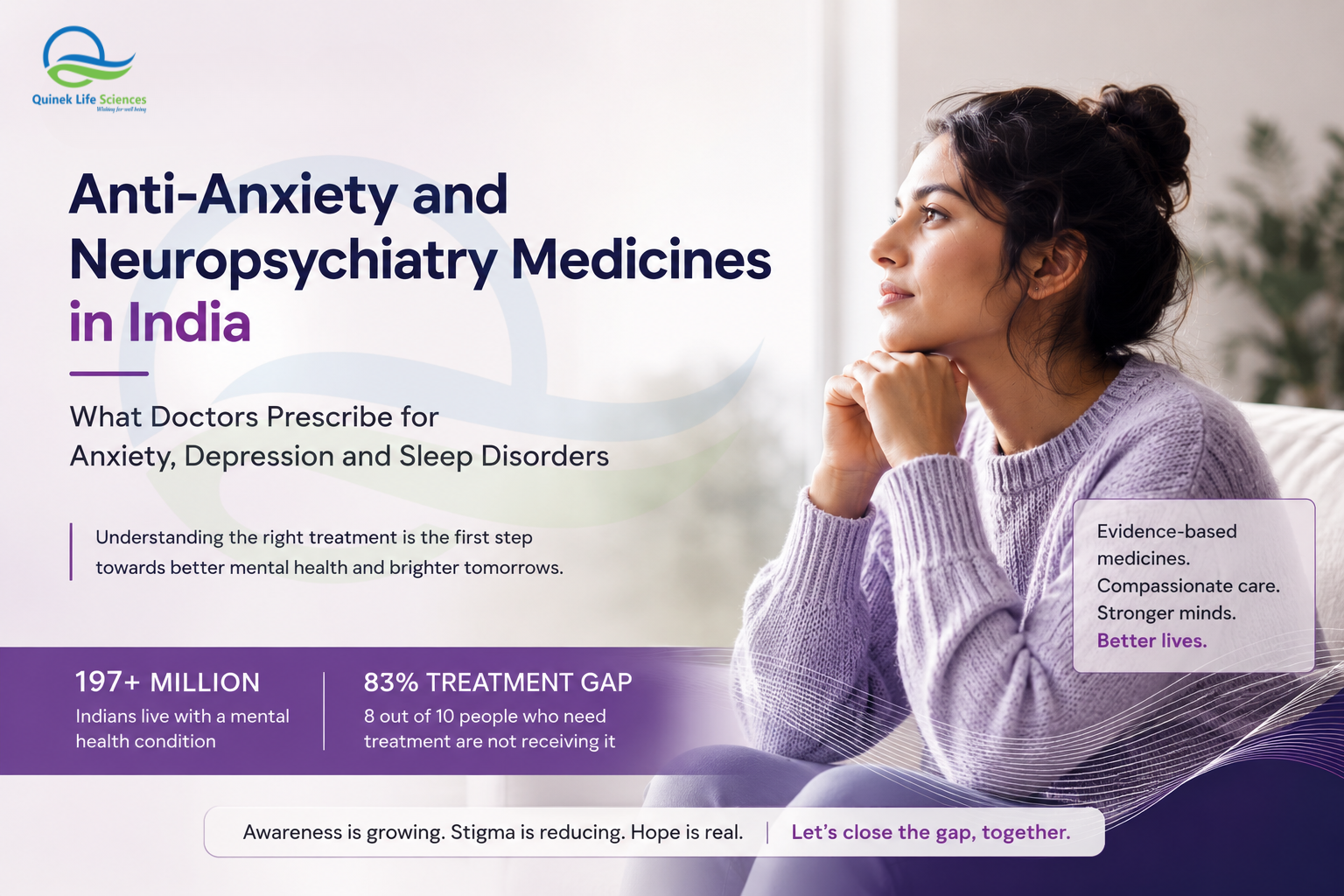
Anti-Anxiety and Neuropsychiatry Medicines in India — What Doctors Prescribe for Anxiety, Depression and Sleep Disorders
India is facing a mental health crisis that the healthcare system is only beginning to address. Over 197 million people in India live with a mental health condition — and most of them are not receiving treatment. Understanding the medicines that help is the first step towards changing that.
India’s Mental Health Crisis — And Why Medicines Matter
For decades, mental health in India was spoken about in hushed tones — if it was spoken about at all. That is changing. Awareness is growing, stigma is slowly reducing, and more Indians are taking the step of seeking professional help for conditions that have long gone unaddressed. But awareness without access is not enough.
The treatment gap for mental health in India stands at 83% — meaning 8 in 10 people who need treatment are not receiving it. The reasons are complex: shortage of psychiatrists, cost, stigma and geographic access all play a role. But one factor that is often overlooked is the availability of quality, affordable neuropsychiatry medicines from reliable pharmaceutical sources.
This guide covers the main categories of anti-anxiety and neuropsychiatry medicines prescribed in India — what they are, how they work, and when they are used — for patients trying to understand their prescription, caregivers supporting a loved one, and specialists looking for a reliable pharmaceutical partner.
“Mental health conditions are medical conditions. They respond to treatment. And the medicines prescribed for them — when used correctly and consistently — give people their lives back.”
The Conditions These Medicines Treat
Neuropsychiatry medicines are prescribed for a wide range of conditions. The most commonly treated in India include:
Generalised Anxiety Disorder (GAD)
Persistent, excessive worry about everyday situations. Physical symptoms include restlessness, muscle tension, heart palpitations and difficulty sleeping. GAD is one of the most underdiagnosed conditions in Indian primary care.
Major Depressive Disorder (MDD)
Persistent low mood, loss of interest, fatigue, disturbed sleep and in severe cases, suicidal ideation. India has among the highest burden of depression in the world. Most cases are treatable with a combination of medicines and therapy.
Insomnia and Sleep Disorders
Chronic insomnia affects an estimated 10–30% of Indian adults. In neuropsychiatry, sleep disorders are often secondary to anxiety, depression or stress — and require a targeted medical approach rather than over-the-counter sleeping aids.
Obsessive Compulsive Disorder (OCD)
Recurrent, unwanted intrusive thoughts (obsessions) and repetitive behaviours (compulsions) performed to reduce anxiety. OCD is significantly underdiagnosed in India and responds well to specific classes of antidepressant medicines combined with therapy.
Bipolar Disorder
Characterised by episodes of mania (elevated mood, impulsivity, reduced need for sleep) alternating with depression. Requires long-term mood stabilising medication and specialist monitoring — not just treatment of acute episodes.
Schizophrenia and Psychotic Disorders
Conditions involving loss of contact with reality — hallucinations, delusions and disorganised thinking. Among the most medically intensive neuropsychiatric diagnoses, requiring antipsychotic medicines and long-term psychiatric care.
Categories of Neuropsychiatry Medicines
1. Antidepressants
Antidepressants are the most widely prescribed class of neuropsychiatry medicines globally. In India, they are used not just for depression but also for anxiety disorders, OCD, panic disorder and certain pain conditions. They work by modulating neurotransmitter levels in the brain — primarily serotonin, norepinephrine and dopamine.
SSRIs — Selective Serotonin Reuptake Inhibitors
The first-line treatment for most depressive and anxiety disorders. SSRIs — including Escitalopram, Sertraline and Fluoxetine — increase serotonin availability in the brain by blocking its reabsorption. Generally well tolerated and prescribed for conditions ranging from GAD to depression, OCD and social anxiety.
SNRIs — Serotonin-Norepinephrine Reuptake Inhibitors
Venlafaxine and Duloxetine are the most commonly prescribed SNRIs in India. They address both serotonin and norepinephrine pathways — offering benefits in depression combined with anxiety, and in conditions involving chronic pain (particularly diabetic neuropathy).
Mirtazapine
A noradrenergic and specific serotonergic antidepressant — particularly useful when depression is accompanied by significant insomnia, poor appetite or weight loss. Its sedating properties make it especially suitable for evening administration in patients with sleep disturbances.
2. Anxiolytics — Anti-Anxiety Medicines
Anxiolytics are medicines prescribed specifically to reduce anxiety symptoms. In India, these are among the most frequently prescribed neuropsychiatry medicines — used in everything from acute anxiety episodes to chronic generalised anxiety requiring long-term management.
Benzodiazepines
Clonazepam, Alprazolam and Lorazepam are the most commonly prescribed benzodiazepines in India. They enhance GABA activity in the brain, producing rapid anti-anxiety and sedative effects. Highly effective for acute anxiety episodes and short-term use — but carry a risk of dependence with prolonged use and require careful prescribing and monitoring.
Buspirone
A non-benzodiazepine anxiolytic with a much lower risk of dependence and sedation. Buspirone is increasingly preferred for long-term anxiety management, particularly in patients with GAD where chronic treatment is required and the risks of benzodiazepine dependency are a concern.
Pregabalin and Gabapentin
Originally anticonvulsants, Pregabalin and Gabapentin are now widely used in neuropsychiatry for anxiety disorders, particularly where anxiety is combined with neuropathic pain. Pregabalin has demonstrated efficacy comparable to SSRIs in GAD treatment.
Beta-Blockers for Anxiety
Propranolol is prescribed for performance anxiety and situational anxiety — reducing the physical symptoms of anxiety (palpitations, tremor, sweating) without the sedative effects of benzodiazepines. Commonly prescribed for public-speaking anxiety, exam stress and acute situational anxiety.
3. Sleep Disorder Medicines
Melatonin
The first-line approach for mild insomnia and circadian rhythm disorders. Melatonin is a naturally occurring hormone that regulates the sleep-wake cycle — supplementing it helps reset disrupted sleep patterns, particularly in shift workers, jet lag and age-related sleep disturbances. Non-addictive and well tolerated.
Non-Benzodiazepine Hypnotics (Z-Drugs)
Zolpidem and Zopiclone act on GABA receptors like benzodiazepines but with shorter duration of action and a lower risk of next-day sedation. Prescribed for short-term management of severe insomnia — always with clear duration limits to minimise dependence risk.
4. Mood Stabilisers
Lithium
The gold standard mood stabiliser for Bipolar Disorder — one of the few psychiatric medicines with proven suicide risk reduction. Lithium requires regular blood monitoring to maintain therapeutic levels, but remains one of the most effective long-term treatments for mood cycling disorders.
Valproate and Lamotrigine
Anticonvulsants with proven mood-stabilising properties. Valproate is particularly effective for the manic phase of Bipolar Disorder, while Lamotrigine is preferred for the depressive phase. Both are widely used alternatives or additions to Lithium in long-term bipolar management.
5. Antipsychotics
Antipsychotic medicines are the cornerstone of treatment for schizophrenia and related psychotic disorders. Second-generation (atypical) antipsychotics — including Risperidone, Olanzapine, Quetiapine and Aripiprazole — are preferred in current practice for their broader efficacy and improved side effect profiles compared to older agents.
At lower doses, several antipsychotics are also prescribed as augmentation strategies in treatment-resistant depression and severe anxiety — reflecting the versatility of this class of medicines across multiple neuropsychiatric conditions.
What Every Patient and Caregiver Should Know
Neuropsychiatry medicines work — but they work over time. Most antidepressants and anxiolytics take two to six weeks to produce their full therapeutic effect. Stopping them too early is one of the most common reasons treatment fails.
Never stop a neuropsychiatry medicine abruptly without consulting your doctor. Many of these medicines require gradual tapering to avoid discontinuation effects. And never self-prescribe — the selection of the right medicine, at the right dose, for the right duration, is a clinical decision.
Medicines are one part of treatment. Therapy, lifestyle changes, sleep hygiene and social support all matter too. The best outcomes in neuropsychiatry come from combining all of these — not from any one intervention alone.
Quinek Life Sciences — Neuropsychiatry Segment
A Dedicated Neuropsychiatry Range — Built for India’s Growing Mental Health Needs
At Quinek Life Sciences, we recognised the growing demand for quality neuropsychiatry medicines in India early. Mental health is no longer a niche segment — it is one of the fastest growing pharmaceutical categories in the country, driven by rising awareness, increasing diagnosis rates and a genuine unmet need across urban and semi-urban India.
Our neuropsychiatry range covers anxiolytics, antidepressants, sleep disorder medicines, mood stabilisers and antipsychotic support — manufactured at our WHO-GMP, GLP and ISO certified facilities. Every formulation is developed to the same exacting quality standards that specialists across our other segments have trusted.
If you are a psychiatrist, neurologist, or general physician with a psychiatric caseload looking for a reliable neuropsychiatry pharmaceutical partner — or a distributor looking to expand into this rapidly growing segment — we would like to talk.
Mental Health Treatment in India Is Changing — And It Starts With Better Access
For too long, mental health conditions in India were either dismissed as weakness or treated in silence. That is changing — slowly, but meaningfully. More people are seeking help, more psychiatrists and psychologists are entering the field, and more primary care physicians are recognising and treating mental health conditions than ever before.
But treatment requires medicines. And medicines require a pharmaceutical industry that takes neuropsychiatry as seriously as any other specialty. Quality, availability, affordability and consistent supply — these are the pharmaceutical responsibilities that shape whether a patient takes their medicine or abandons treatment after two weeks.
If you are a patient — your condition is real and your treatment matters. Stick with it. If you are a prescriber — your pharmaceutical partner matters more in this segment than almost any other. Choose one that understands what is at stake.
Medical Disclaimer: This article is for educational and informational purposes only and does not constitute medical advice. All neuropsychiatric treatment decisions must be made by a qualified psychiatrist, neurologist or licensed mental health professional. If you or someone you know is in crisis, please contact iCall (9152987821) or Vandrevala Foundation (1860-2662-345) — both available 24/7.
Sources: National Mental Health Survey of India · WHO Mental Health Atlas · NIMHANS · Indian Psychiatric Society · Quinek Life Sciences Neuropsychiatry Segment