Infertility is now a widely recognized global health challenge—impacting couples across all regions. At the same time, fertility rates have declined over decades, and more couples are trying to conceive later in life when egg and sperm quality become more vulnerable to oxidative stress and mitochondrial energy decline.
This educational guide explains infertility in both men and women and the science behind DHEA 75 mg + Reduced CoQ10 (Ubiquinol 75 mg) as a fertility-support approach focused on hormonal microenvironment + antioxidant & mitochondrial support.
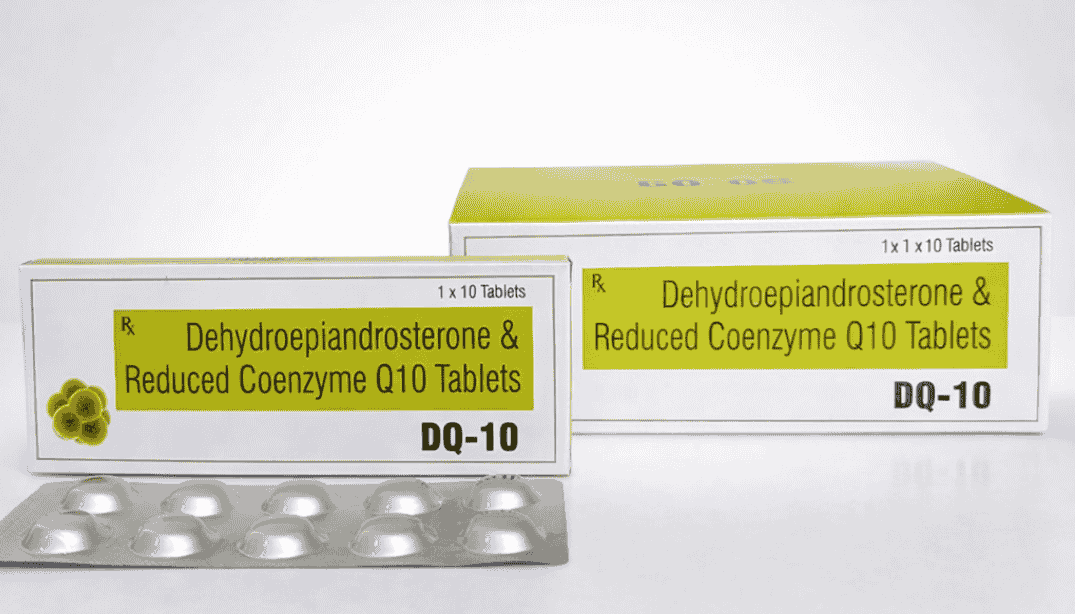
Explore the product here: DQ-10 (DHEA 75 mg + Reduced CoQ10 Ubiquinol 75 mg)
Understanding Infertility (Male + Female)
Infertility is typically defined as the inability to achieve pregnancy after 12 months of regular unprotected intercourse. In real-world practice, infertility is often a couple-based condition—male and female factors may overlap.
Male vs Female Contribution (The Real Picture)
-
Male factors can contribute to a large proportion of infertility cases (alone or combined)
-
Female factors can include ovulatory dysfunction, ovarian reserve issues, tubal factors, endometriosis, and age-related egg quality decline
-
In many couples, both partners need evaluation
See our fertility support range
The Core Biological Problem in Infertility: Oxidative Stress + Energy Deficit
Many infertility cases—especially unexplained, age-related, or idiopathic cases—share two important biological issues:
1) Oxidative Stress (ROS Overload)
Reactive oxygen species (ROS) can damage:
-
Sperm membrane lipids → reduced motility
-
Sperm DNA → fragmentation risk
-
Oocyte and granulosa cells → reduced egg competence
2) Mitochondrial Dysfunction (Low Cellular Energy)
-
Sperm motility requires constant ATP (energy)
-
Oocytes require massive mitochondrial energy for maturation, fertilization, and early embryo development
This is why fertility support increasingly focuses on antioxidant defense + mitochondrial function—where DHEA 75 mg + Reduced CoQ10 has a strong biological rationale.
Coenzyme Q10 (CoQ10) and Fertility: Why It Matters
Reduced CoQ10 is a fat-soluble compound found in nearly every cell. It supports:
-
Mitochondrial electron transport → ATP production
-
Antioxidant defense → protection from oxidative damage
CoQ10 levels and mitochondrial efficiency tend to decline with age—often becoming more relevant in fertility planning after 30–35 years.
Ubiquinone vs Ubiquinol: Why “Reduced CoQ10” Is Preferred in DQ-10
CoQ10 exists in two forms:
-
Ubiquinone (oxidized form)
-
Ubiquinol (reduced/active antioxidant form)
Why Ubiquinol (Reduced CoQ10) Is Considered More Effective
Many comparative studies show ubiquinol can raise plasma CoQ10 levels more efficiently than ubiquinone in certain settings—supporting the rationale for using Reduced CoQ10 (Ubiquinol) in fertility-support formulas.
In simple words: Ubiquinol is the “ready-to-act” antioxidant form, while ubiquinone often needs conversion in the body first.
CoQ10 in Male Fertility: Where It Works
Sperm cells have mitochondria packed in the midpiece that power motility. Reduced CoQ10 support is commonly used for:
-
Low motility (asthenozoospermia)
-
Low sperm concentration
-
Oxidative stress–related semen quality issues
-
Supportive role in high DNA fragmentation risk
Expected Timeline in Men
Sperm development takes ~2–3 months, so most fertility protocols assess semen improvement after at least 12 weeks of consistent use of DHEA 75 mg + Reduced CoQ10.
Recommended reading: Male Infertility and Oxidative Stress
CoQ10 in Female Fertility: Egg Quality & Mitochondrial Support
Oocytes are among the most mitochondria-rich cells in the human body. With age:
-
Mitochondrial energy drops
-
Oxidative stress increases
-
Risk of chromosomal issues rises
Reduced CoQ10 is often discussed for:
-
Ovarian aging support
-
Egg quality support
-
IVF preparation (commonly 60–90 days pretreatment)
DHEA in Female Fertility: Why 75 mg Is a Common Protocol
DHEA (Dehydroepiandrosterone) is a prohormone precursor produced by adrenal glands and reproductive tissues. In fertility care, DHEA 75 mg is most often discussed for:
-
Diminished ovarian reserve (DOR)
-
Poor ovarian response (POR)
-
Selected cases of ovarian aging under specialist supervision
Why 75 mg/Day Is Used in Many Fertility Settings
A daily dose of DHEA 75 mg (often 25 mg × 3 doses in many protocols) is widely referenced in fertility clinic practice and research discussions for DOR/POR preparation.
Expected Timeline in Women
Follicle development takes time. Many clinicians plan 3–4 months of DHEA 75 mg + Reduced CoQ10 support before expecting meaningful changes in response/quality.
Introducing DQ-10: Dual-Pathway Fertility Support (Male + Female)
Composition
DQ-10 contains:
-
DHEA 75 mg
-
Reduced Coenzyme Q10 (Ubiquinol) 75 mg
Why This Combination Is Logical
DHEA 75 mg + Reduced CoQ10 is designed to address two major fertility challenges:
-
Hormonal micro-environment support (DHEA 75 mg)
-
Antioxidant + mitochondrial energy support (Reduced CoQ10 Ubiquinol)
DQ-10 is positioned for:
-
Female: ovarian reserve / egg quality support (doctor-guided)
-
Male: sperm energy + oxidative balance support (supportive adjunct)
Learn more about DQ-10 (DHEA 75 mg + Reduced CoQ10)
How to Take DQ-10 (Best Practices)
Take with Food (Important)
Both DHEA 75 mg and Reduced CoQ10 are better absorbed with meals—ideally with healthy dietary fats.
Consistency Matters More Than “Random Use”
Daily use of DHEA 75 mg + Reduced CoQ10 over the right timeline is key:
-
Men: assess after ~3 months
-
Women: plan ~3–4 months for egg quality support
(Always follow specialist advice and overall fertility plan.)
Graph Section (Visual Recommendations)
Graph 1 — Global Fertility Decline (Trust-Building)
Add a simple line graph showing fertility rates falling over decades.
Graph 2 — Mechanism Schematic
Show how DHEA 75 mg + Reduced CoQ10 works:
-
Oxidative stress (ROS) ↓
-
Antioxidant capacity / CoQ10 status ↑
-
Mitochondrial ATP support ↑
FAQ — DQ-10 (DHEA 75 mg + Reduced CoQ10) for Fertility
1) What is DQ-10 used for?
DQ-10 is designed as a fertility-support supplement combining DHEA 75 mg + Reduced CoQ10 Ubiquinol 75 mg, used in clinic-style supportive plans for egg quality and sperm quality support.
2) Can men take DQ-10 (DHEA 75 mg + Reduced CoQ10)?
Reduced CoQ10 is commonly used for male fertility support. DHEA 75 mg should be used under professional guidance, especially if the user has hormonal concerns.
3) Why is Reduced CoQ10 (ubiquinol) better than regular CoQ10?
Reduced CoQ10 (Ubiquinol) is the active reduced form and is commonly preferred for quicker CoQ10 status improvement compared to regular ubiquinone.
4) How long should DHEA 75 mg + Reduced CoQ10 be taken?
-
Men: usually ~3 months to assess semen changes
-
Women: often 3–4 months in egg-quality support plans
5) Is DHEA 75 mg safe for everyone?
Not for everyone. Women with PCOS, androgen excess, hormone-sensitive conditions, or those who are pregnant should only use DHEA 75 mg with fertility specialist guidance.
6) Can DQ-10 (DHEA 75 mg + Reduced CoQ10) replace IVF or fertility treatment?
No. It’s a supportive approach that may complement medical evaluation and fertility treatment plans.
Conclusion
Infertility management is increasingly focused on egg and sperm quality, where oxidative stress and mitochondrial energy play major roles. DQ-10 combines DHEA 75 mg (widely referenced in DOR/POR preparation) with Reduced CoQ10/Ubiquinol 75 mg (active antioxidant + mitochondrial support) as a dual-pathway fertility support strategy.
The combination of DHEA 75 mg + Reduced CoQ10 addresses both hormonal balance and cellular energy production, making it a comprehensive approach to fertility support for both men and women.
Learn more about DQ-10 (DHEA 75 mg + Reduced CoQ10)
Contact us for product or distribution enquiries
Medical Disclaimer: This blog is for educational purposes only and does not replace medical advice. Individuals should consult qualified healthcare providers before starting any supplement, especially hormone-related products like DHEA 75 mg.
Wishing for Wellbeing,
Team Quinek Life Sciences